Cardio
Stair Stepper Container Loading and CBM Calculation: Estimating Units per 40HQ from Carton Dimensions
For a US online seller, the figure that quietly decides whether a stair stepper container loading plan makes money is rarely the unit price on the factory quotation. It is how many units actually fit inside the container you are paying for. Miss your carton maths by ten percent and you either pay ocean freight on empty air or short your Q4 inventory plan by several hundred units.
This guide walks through the exact arithmetic buyers use to convert carton dimensions and cubic metres (CBM) into a working stair stepper container loading estimate for a 40HQ, while flagging where theoretical numbers usually break. HiTI supplies stair stepper machines to wholesalers, private-label owners, and studio buyers; specific carton dimensions and container load figures are provided on request rather than assumed here.
Why Stair Stepper Container Loading Maths Beats Unit Price
Ocean freight is a fixed per-container expense spread across however many units you can safely load. A model engineered with a tighter carton footprint frequently delivers a lower landed cost than a cheaper machine packed in an oversized box.
US e-commerce sellers also absorb secondary storage and fulfilment penalties: bulky retail cartons consume more pallet positions, trigger higher Amazon FBA or 3PL storage fees, and incur dimensional-weight surcharges on last-mile parcel delivery. Carton efficiency is a core commercial specification, not an afterthought for the warehouse.
Terminology Check: Mini Stepper vs. Stair Climber Cartons
Before running any calculation, confirm which machine category you are actually quoting. Buyers and suppliers routinely mix up stepper terms in early sourcing emails, yet their outer cartons are never interchangeable.
| Machine Category | Structural Profile | Typical Carton & Loading Impact |
|---|---|---|
| Mini Stepper | Compact base, low pedals, typically no handlebars | Smallest carton footprint; highest unit count per CBM |
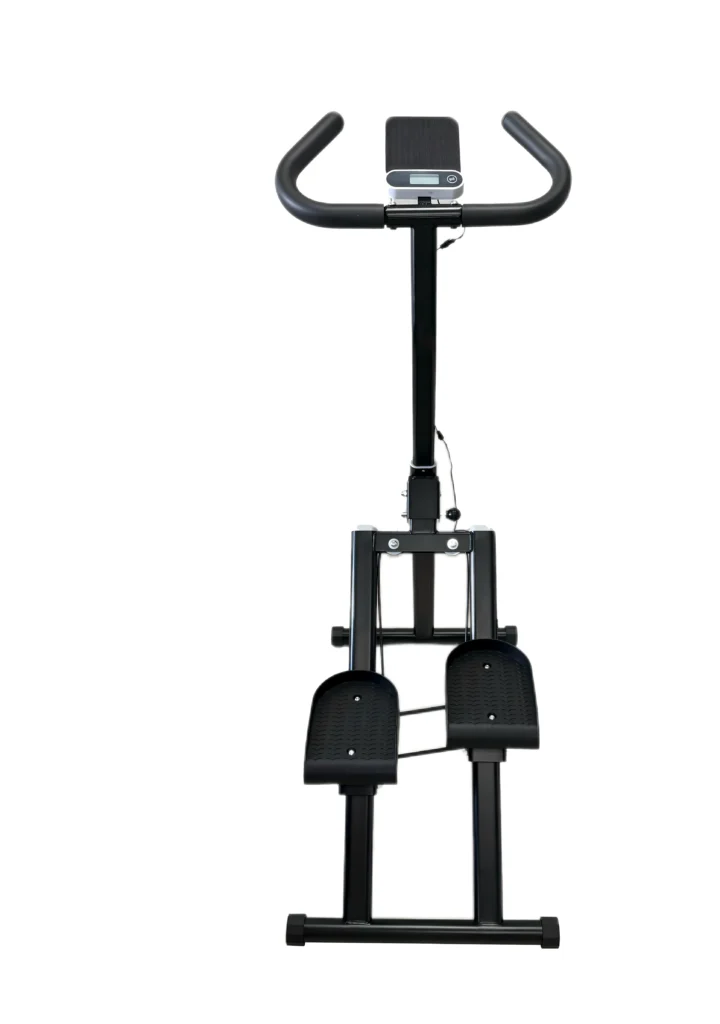
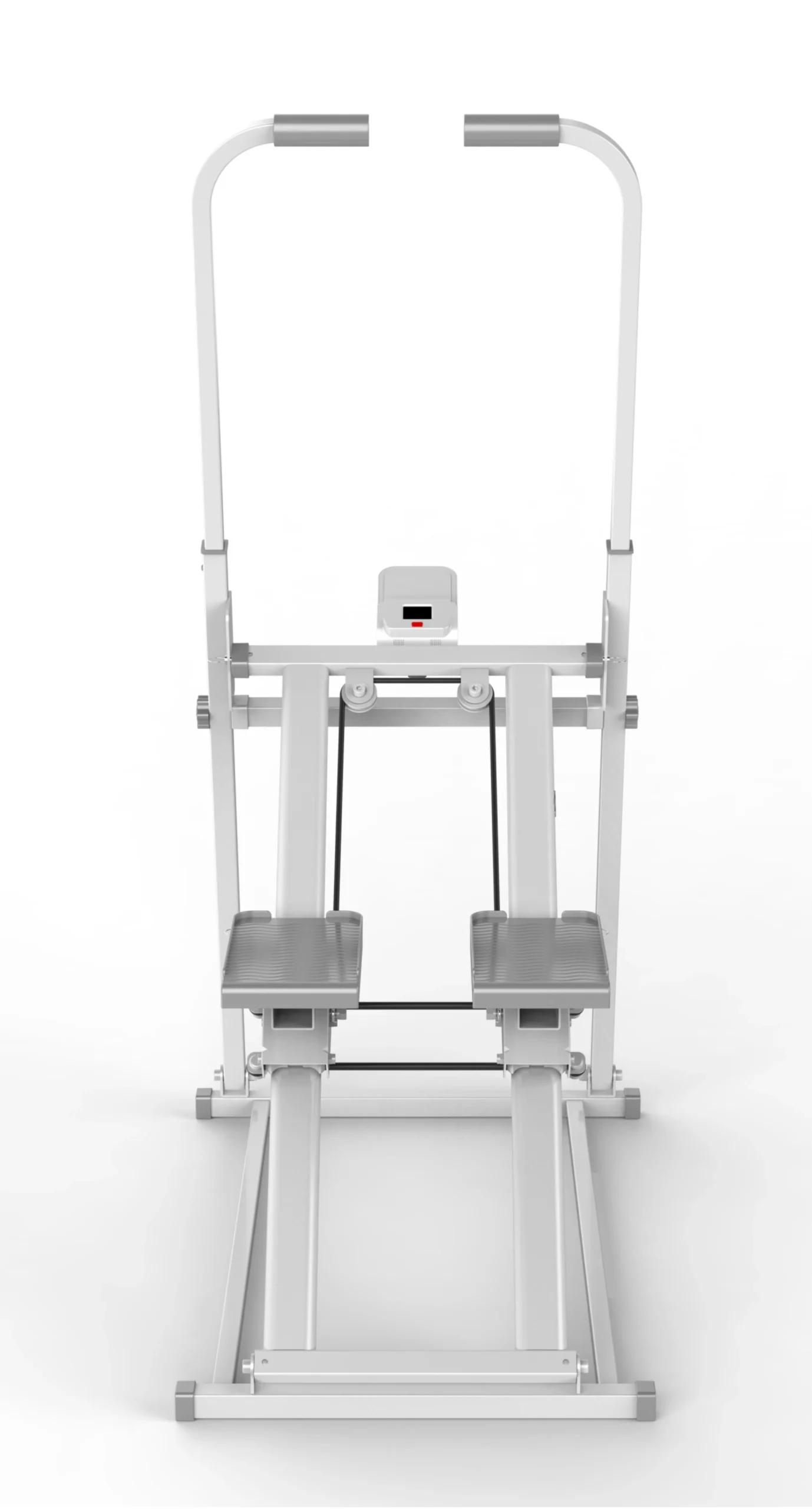
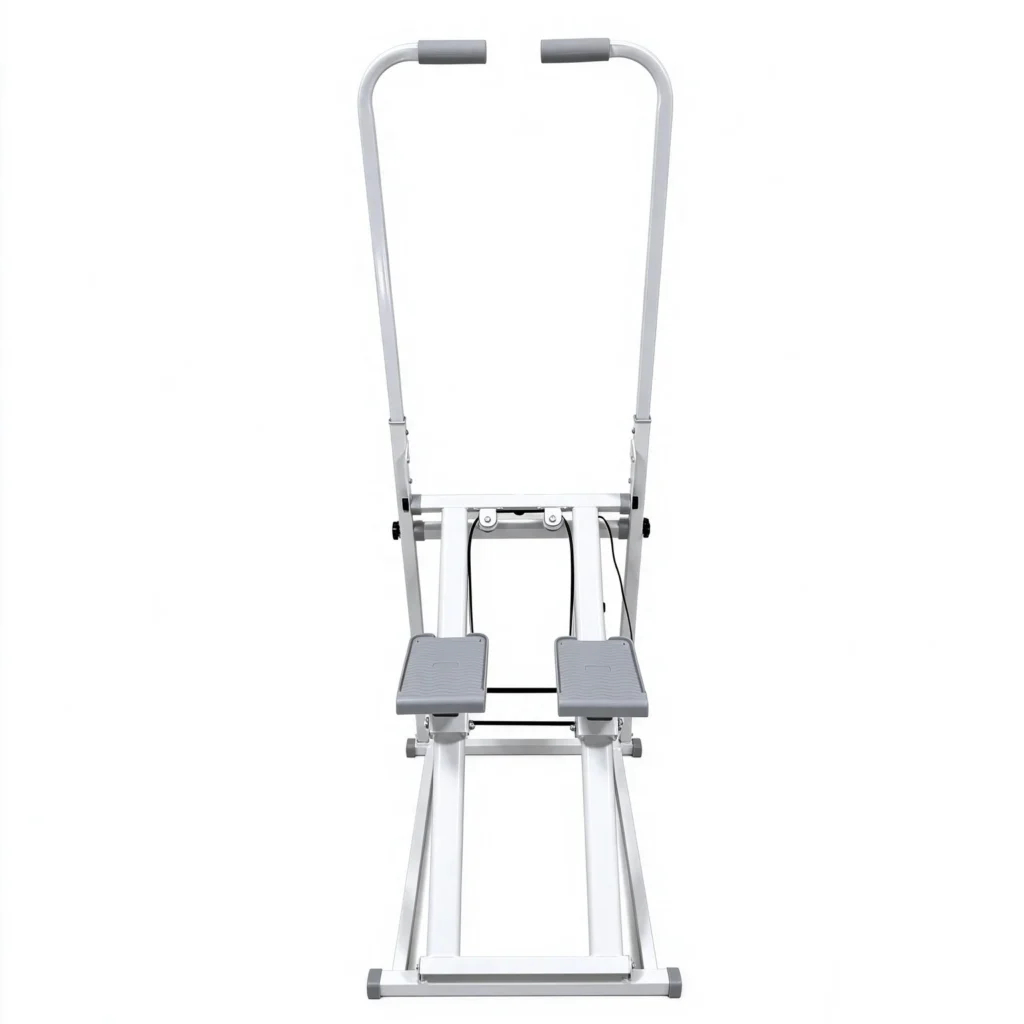
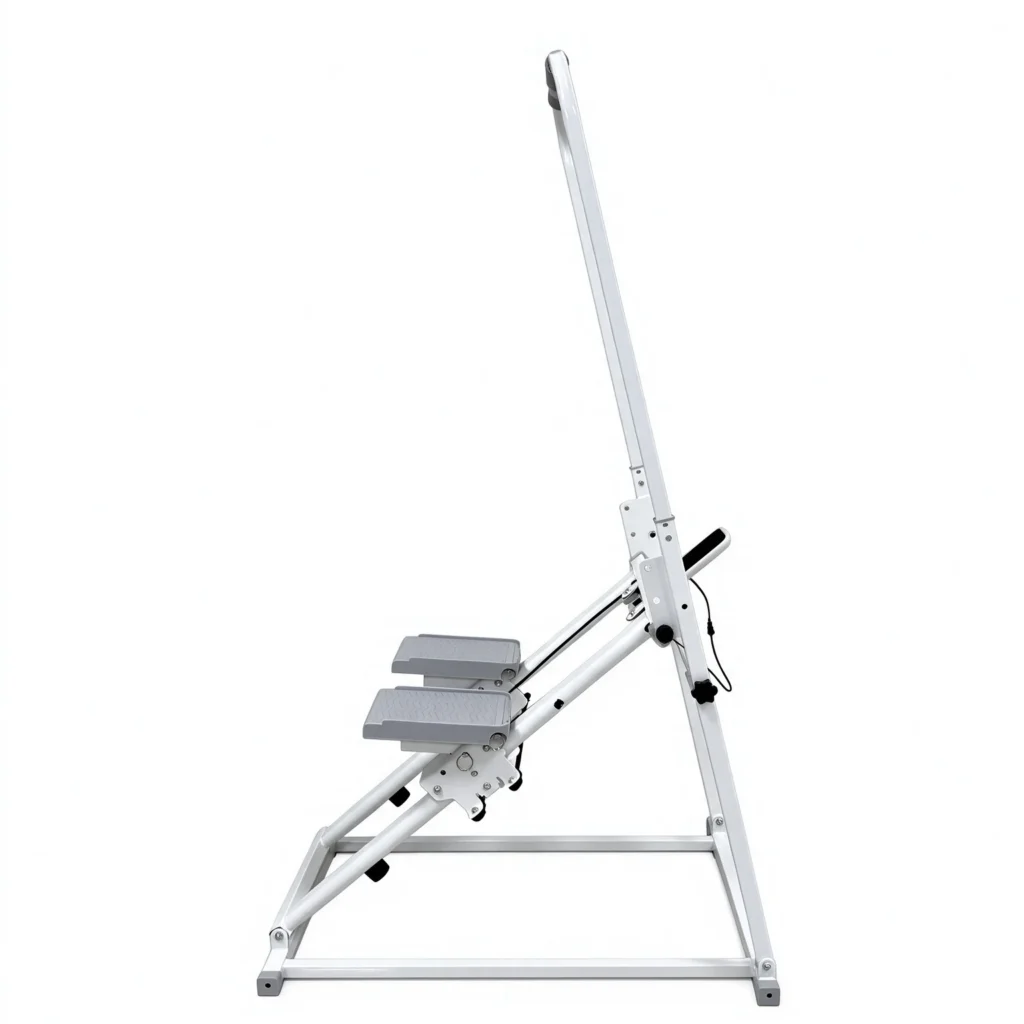
| Stair Stepper / Stair Climber | Larger upright frame, handlebars, and digital console | Materially larger carton; sensitive to knockdown design |
| Twist Stepper | Rotational lateral pedal mechanism | Wider base footprint requiring tailored inner foam support |
| Under-Desk / Seated Stepper | Low-profile frame built for seated office or rehab use | Distinct flat-box geometry separate from upright steppers |
A stair stepper container loading count quoted for a compact mini stepper tells you nothing about a full-frame stair climber. Always anchor your freight spreadsheet to an exact factory model number rather than a generic category name.
The Core Stair Stepper Container Loading Formula
The baseline volume calculation is straightforward—work directly in metres, or convert from centimetres:
- CBM per carton (in metres): Length (m) × Width (m) × Height (m)
- CBM per carton (from centimetres): [Length (cm) × Width (cm) × Height (cm)] ÷ 1,000,000
- Units per container (volume basis): Usable container volume (CBM) ÷ CBM per carton
- Multi-pack adjustment: If one master carton holds multiple retail boxes, multiply the carton count by units per master carton
Keep in mind that this arithmetic gives you a theoretical ceiling, not a loading guarantee. It assumes perfectly rigid boxes stacked wall-to-wall with zero clearance gaps, which never happens in real container stuffing.
Usable Volume Is Not Nominal 40HQ Volume
A 40HQ high-cube container is commonly cited at roughly 76 CBM of nominal internal capacity, but the usable volume you can plan against is lower due to door-frame clearance, carton dimensions, and stacking geometry. Confirm internal dimensions, maximum payload limits, and carrier or US Customs and Border Protection (CBP) import shipping requirements with your freight forwarder before locking purchase quantities.
Gross weight deserves equal scrutiny when planning stair stepper container loading. If the combined gross weight of your cartons hits the container's maximum road or vessel payload limit before the cubic space is filled, your shipment is weight-constrained and the CBM formula will overstate capacity. Heavy-gauge steel frames and wide stabilizers can push steppers into that territory, so always request gross weight per carton alongside outer dimensions.
Seven Variables That Change the Real Container Count
Even with accurate carton measurements, seven packaging and logistics choices can shift your actual loadable quantity:
- Carton hierarchy: Whether the quoted size describes an individual retail colour box or a multi-unit brown master carton.
- Protective dunnage: Expanded foam, moulded pulp, or corrugated inserts that add millimetres to every outer face.
- Assembly level: Whether the stepper ships fully assembled, semi-knocked down (SKD), or flat-packed.
- Sub-component packing: Whether handlebars, consoles, or stabilizer bars nest inside the main frame or require separate space.
- Palletized vs. floor-loaded: Standard US pallet footprints and maximum stack heights reduce usable cubic capacity compared with loose floor loading.
- Stacking and crush limits: Orientation arrows and maximum vertical load ratings that restrict how high cartons can be tiered.
- Private-label additions: Upgraded retail boxes, thicker manuals, or promotional inserts that alter finished carton dimensions.
Treat each of these seven items as a specific question for your manufacturer rather than an assumption baked into your landed-cost model.
Turning an Estimate Into a Sourcing Decision
When shortlisting suppliers, compare candidate models on CBM per retail unit rather than raw carton dimensions alone, then test the leading option against an actual stuffing plan. Ask the factory for a container loading diagram or a confirmed per-model load count to validate your stair stepper container loading spreadsheet before booking freight.
HiTI’s stair stepper product pages—including the PL01 model page—note that detailed carton data and container load figures are available on request, giving your operations team verified numbers instead of rough estimates. If you are building a broader home cardio assortment, you can also review the wider equipment lineup across HiTI products.
8-Point Buyer Checklist for Stair Stepper Container Loading
Run through these eight checks before finalizing your purchase order quantity:
- Confirm the exact stepper category and factory model number before quoting any container figure.
- Request outer carton dimensions in centimetres and clarify whether they apply to the retail box or master carton.
- Obtain gross weight per carton, net unit weight, and exact units per carton in writing.
- Clarify whether the shipment will be floor-loaded or palletized, including pallet dimensions and stack height limits.
- Request a model-specific loading diagram or confirmed units-per-40HQ count from the factory.
- Verify whether private-label packaging, manuals, or retail sleeves change outer carton dimensions or gross weight.
- Check your freight forwarder's usable CBM and route payload limits for US port and inland rail/truck legs.
- Measure a physical pre-production sample carton to confirm dimensions before mass production begins.
FAQ
What is stair stepper container loading CBM calculation?
Stair stepper container loading CBM calculation is the process of converting a machine's outer carton dimensions into cubic metres, then dividing a container's usable volume by that figure—while cross-checking gross weight limits—to estimate how many units fit inside a 40HQ.
Can I estimate units per 40HQ from assembled product dimensions alone?
No. Assembled machine dimensions describe the workout footprint, not the shipping package. You need confirmed outer carton dimensions, protective packaging allowances, gross weight, and units per carton for the specific SKU.
Does private-label packaging change how many units fit in a container?
Yes, it can. Switching from a plain mailer to a full-colour retail box, adding thicker protective foam, or including multi-language manuals can increase outer carton dimensions or carton weight, reducing total loadable units.
Why do two suppliers quote different units per 40HQ for similar machines?
Differences in knockdown disassembly level, internal nesting, carton board thickness, palletization rules, and frame weight distribution all change the final count. Always ask each supplier for the underlying carton dimensions and gross weight behind their quote.
Conclusion
The CBM formula is simple; the discipline is in refusing to plug guessed numbers into your freight calculator. Treat every stair stepper container loading figure as strictly model-specific, confirm outer carton dimensions and gross weight in writing, and reconcile cubic capacity against payload limits and a verified loading plan before releasing your deposit.